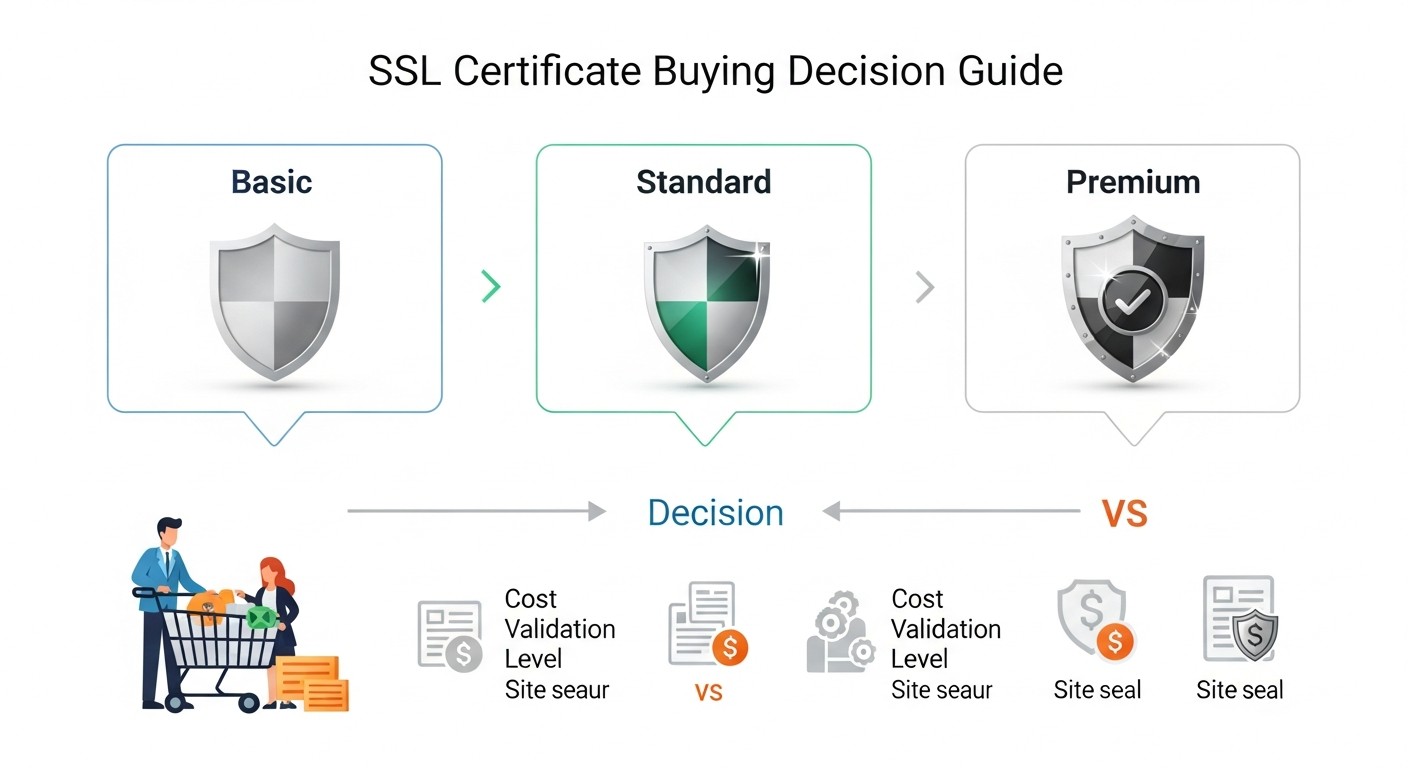
When choosing an SSL certificate, dozens of options can stare back at you. But the decision really comes down to a few simple questions. This guide asks them in order; by the end, you'll clearly see which certificate fits you.
1. What Are You Protecting?
The first split is the certificate's purpose:
- A website → an SSL/TLS certificate (the most common need).
- Email → an S/MIME certificate (signing and encryption).
- Software/applications → a code signing certificate.
- Documents → a document signing certificate.
Most people come for a website; the steps below focus on SSL/TLS.
2. How Many Domains / Subdomains?
- One domain → a single SSL is enough.
- Many subdomains (blog., shop., app.) → Wildcard SSL.
- Several different domains → a multi-domain (SAN/UCC) certificate.
3. What Level of Trust Do You Need?
Here you choose the validation level. Remember: encryption is the same across all three; the difference is in identity validation.
- DV → blogs, personal sites, small projects. Within minutes.
- OV → corporate sites; business identity is verified.
- EV → finance, large e-commerce; the most thorough identity validation.
4. Free or Paid?
Free options (e.g. Let's Encrypt) offer DV and are enough for many sites. A paid certificate adds OV/EV identity, technical support, and a warranty. For a detailed comparison, see Let's Encrypt vs Paid SSL and Free vs Paid SSL.
Quick Decision Table
| Your situation | Recommended |
|---|---|
| Personal blog / small site | DV (single) |
| Site with many subdomains | Wildcard (DV/OV) |
| Corporate marketing site | OV |
| E-commerce / takes payments | OV or EV |
| Finance / high trust | EV |
| Several different domains | Multi-Domain (SAN/UCC) |
Where to Buy and What to Check
- A trusted CA — the certificate is recognized by all major browsers.
- Support — being able to get help with installation/renewal.
- Warranty — cover against certificate-related issues.
- Validity and management — a renewal cycle that suits you (public TLS certificates today max out at around 398 days).
The best certificate isn't the most expensive — it's the one that matches what you're protecting.