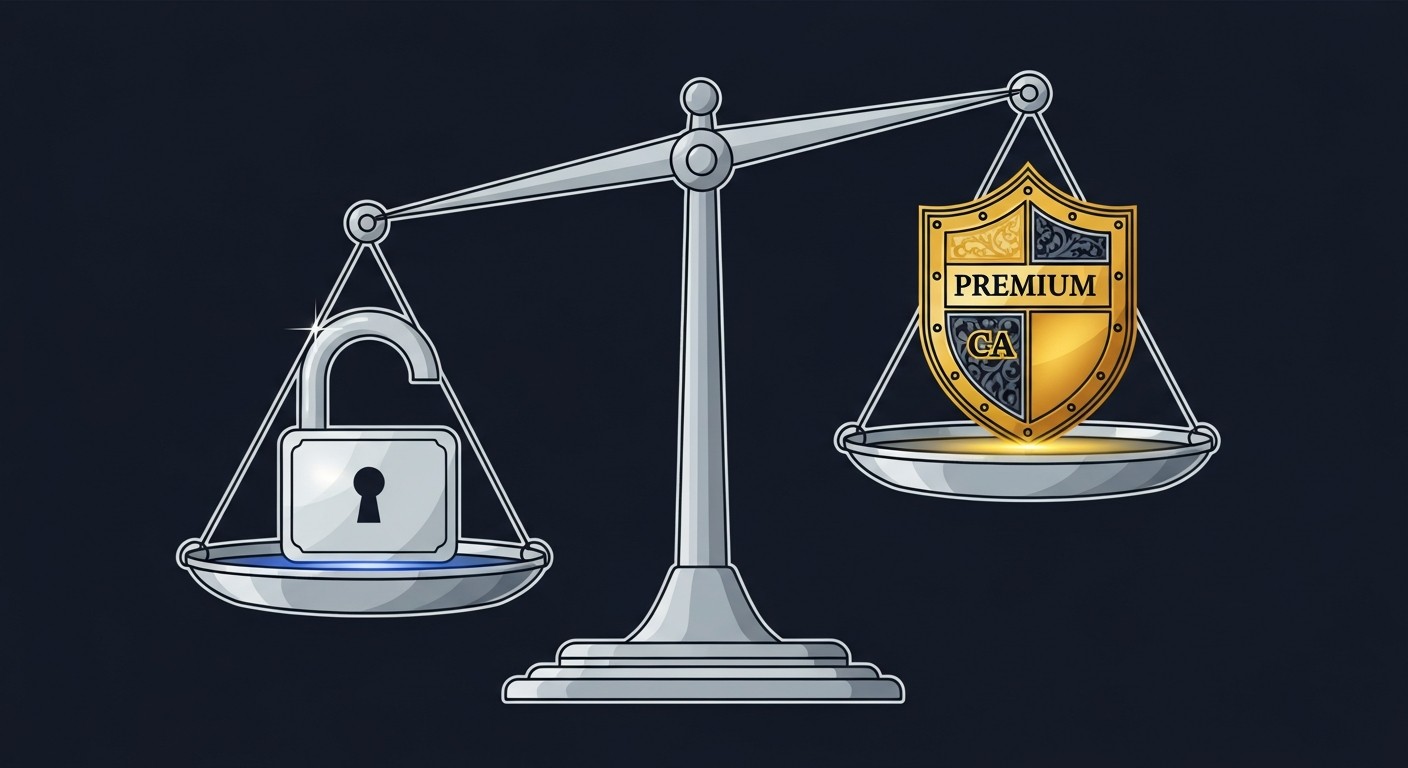
Let's Encrypt is a free, automated certificate authority that moved much of the web to HTTPS, and it's enough for millions of sites. But being free doesn't mean it fits every need. Let's clarify what each one offers and when switching makes sense.
What Does Let's Encrypt Offer?
Let's Encrypt issues free, automatable (via the ACME protocol), DV-only certificates. They're valid for 90 days, so automatic renewal is essentially mandatory. The encryption strength is identical to paid certificates — there's nothing lacking in terms of connection security. It's an ideal option for blogs, personal sites, and many small projects.
What Does Paid SSL Add?
The difference with paid certificates isn't in the encryption — it's in the identity and service behind the certificate:
- OV/EV identity validation — your organization's existence is independently verified (Let's Encrypt only issues DV).
- Technical support — direct help with installation and renewal issues.
- Warranty — a CA warranty against certificate-related failures.
- Management and lifetime — a longer management cycle and enterprise tooling.
| Criterion | Let's Encrypt | Paid SSL |
|---|---|---|
| Validation level | DV only | DV, OV, EV |
| Encryption | Full strength | Full strength (same) |
| Identity validation | None | Yes, with OV/EV |
| Support | Community | Direct technical support |
| Warranty | None | Yes |
| Validity | 90 days (auto-renew) | Longer management cycle |
When Should You Move to Paid?
- E-commerce and payments — verified identity adds customer trust.
- Business sites — those who want to prove the brand is real.
- Support/SLA needs — teams that can't tolerate downtime and want help on hand.
- Complex infrastructure — organizations that can't automate renewal or want central management.
The Bottom Line
Let's Encrypt is a valuable service that made the web safer, and it's the right choice for many sites. But as you grow, take payments, or need organizational trust, moving to a paid certificate that offers verified identity, support, and a warranty becomes the sturdier long-term choice.
Free SSL secures the connection; paid SSL can also vouch for who's behind it.