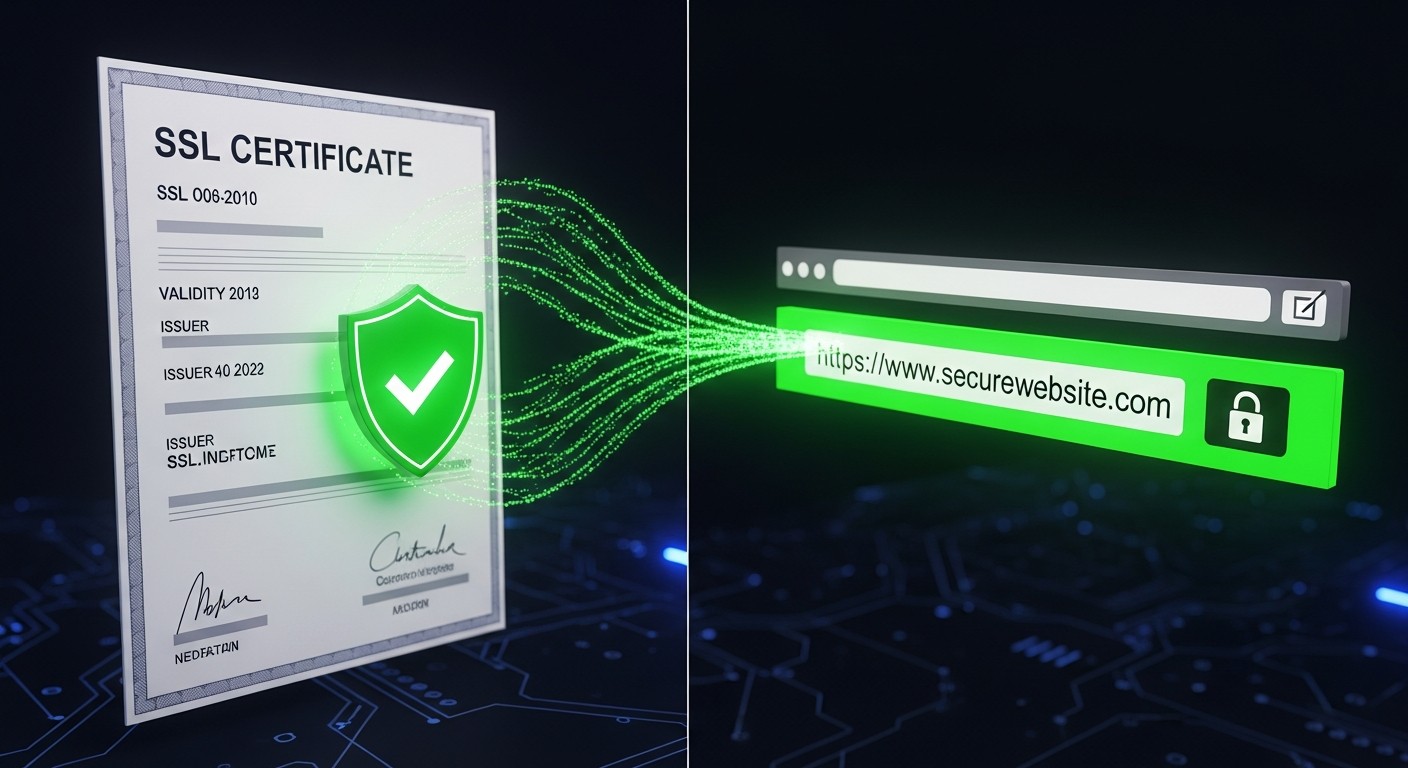
What Is SSL?
SSL (Secure Sockets Layer) is a technology that secures data communication across the internet by encrypting it. Its core purpose is to stop the information exchanged between a user and a website from being read or altered by third parties.
When a site has an SSL certificate, the data passing between browser and server is transmitted safely. That data can include:
- Passwords (e.g. login credentials)
- Credit card and payment details
- Personal data (name, address, email, etc.)
This information is encrypted and can only be decoded by the right parties. In short, SSL means secure data transmission. Modern SSL/TLS uses strong encryption such as AES-256 for the session — one of today's most robust standards, and practically impossible to break.
What Is HTTPS?
HTTPS (HyperText Transfer Protocol Secure) is the version of the familiar HTTP protocol that's secured with SSL or TLS. Normally, data sent over HTTP travels as plaintext, which makes it easy for malicious parties to intercept and read. With HTTPS, that data is encrypted by SSL/TLS and passes through a secure tunnel.
So HTTPS is the protocol that becomes "secure HTTP" thanks to an SSL certificate. The padlock in the address bar and addresses starting with https:// show that a site is using an SSL certificate.
Can You Have HTTPS Without SSL?
No. For HTTPS to work, there must be an SSL (or its modern version, TLS) certificate behind the scenes. If a site doesn't have an SSL certificate, it runs over plain HTTP and its data isn't encrypted — a big risk for both security and user trust.
HTTPS and SEO
Google has treated HTTPS as an official ranking criterion since 2014. If two sites are equal in content quality, the one using HTTPS ranks higher in Google. On top of that, Chrome, Firefox, and other modern browsers flag HTTP sites with a "Not Secure" warning, which drives a significant share of visitors away.
In short, using HTTPS improves SEO performance, raises user trust, and prevents visitor loss. E-commerce, blog, or corporate — whichever it is, HTTPS is a critical security and SEO advantage for every site.
HTTP vs HTTPS
| Feature | HTTP | HTTPS |
|---|---|---|
| Encryption | None | Encrypted with SSL/TLS |
| Data form | Plaintext | Encrypted tunnel |
| Browser label | "Not Secure" | Padlock icon |
| SEO | Disadvantage | Ranking advantage (since 2014) |
| User trust | Low | High |
For a deeper look at why HTTP is no longer enough and what changes the moment you switch, see our dedicated guide on HTTP vs HTTPS and why the padlock matters.
Why SSL and HTTPS Matter
An SSL certificate isn't just a technical measure; it's also a matter of brand reputation, since visitors tend to abandon a site that isn't secure. In e-commerce especially, going without HTTPS means abandonment at the payment step, lost sales, and an SEO drop.
On top of that, data protection laws in some countries (such as GDPR and KVKK) require user data to be encrypted. That makes SSL not just a security measure but a legal requirement.
There's no HTTPS without SSL.
In Summary
- 🔒 SSL is the technology that encrypts data.
- 🔒 HTTPS is HTTP made secure with SSL.
- 🔒 There's no HTTPS without SSL.
- 🔒 HTTPS is necessary for both security and SEO.
For a secure, trustworthy, and Google-friendly site, HTTPS is a must — and SSL is the foundation it's built on.