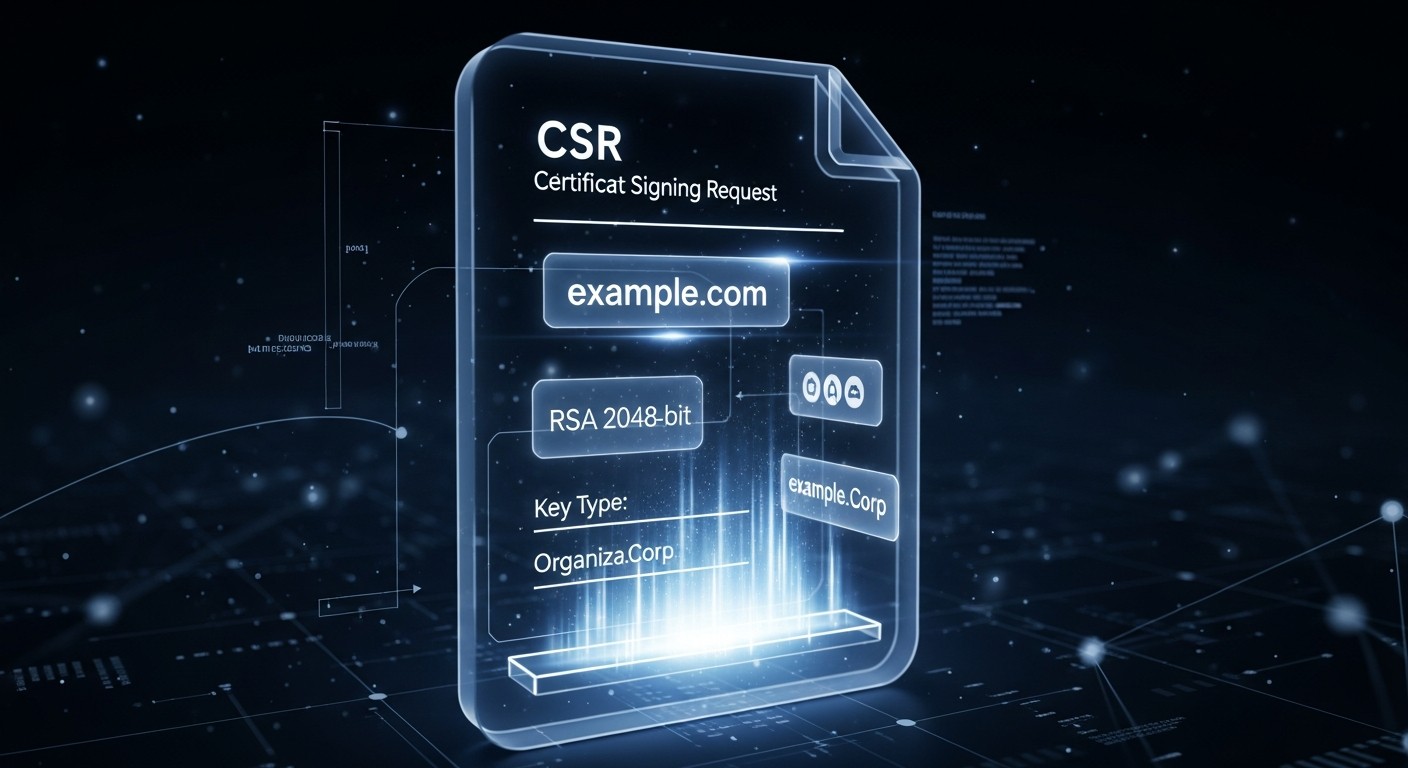
A CSR is the file you send to apply for an SSL certificate; it carries your domain and organization details. A well-formed CSR is the basis of a smooth, trouble-free installation. But its raw format makes it look like unreadable text — so before you order, you'll want to decode it and confirm the details are right.
How to Decode a CSR (2 Ways)
1) Use an online CSR decoder
The easiest way needs no tools at all: paste the CSR into an online decoder and it lists the contents in a readable, table-like form in seconds. You can use our free tool from the box below.
- Open the
.csrfile you have. - Copy its contents (everything between
-----BEGIN CERTIFICATE REQUEST-----and-----END...) or upload the file. - The decoder parses it instantly and lists the details plainly.
2) Decode it with openssl
If you're comfortable on the command line, openssl reads a CSR locally:
This prints the subject, public key info, signature algorithm, and any requested SAN entries — without sending the CSR anywhere.
What Decoding Shows You
- Common Name (CN) — the primary domain the certificate is valid for.
- Subject — the owner's details (organization, country, city).
- Public Key Info — the key's type and length (e.g. 2048-bit RSA).
- Signature Algorithm — the signing algorithm (e.g. SHA-256).
- SAN (Subject Alternative Names) — a list of any additional domains.
These fields are the basic criteria for judging whether the certificate will be correctly configured.
Why Decode a CSR Before Ordering?
- Pre-order check — a wrong domain, missing company detail, or weak algorithm can invalidate the certificate; you want to see it before applying.
- Avoid wasted time — a faulty CSR means reapplying to the CA. Decoding catches problems up front.
- No technical know-how needed — an online decoder lays the details out plainly.
- Security verification — confirm the CSR uses a strong key length and the right algorithm.
Real-World Examples
Example 1: A user accidentally enters example.com instead of www.example.com during their order. Decoding the CSR surfaces the mistake before the order completes, and it's corrected — saving wasted time.
Example 2: An agency decodes a CSR it's setting up for a client and notices the organization name is missing. The detail is added before issuance, heading off a faulty certificate.
A well-formed CSR is the foundation of a solid SSL certificate.